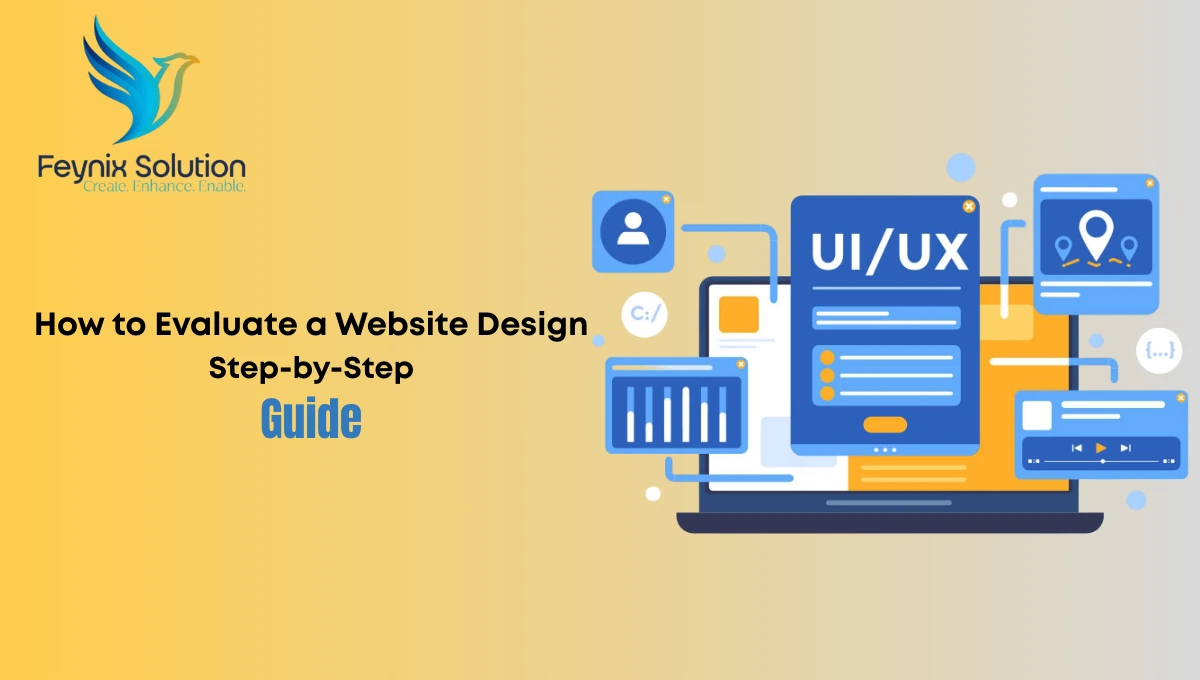
In today’s digital-first world, your website is often the first impression your audience gets of your brand. For businesses in the USA, a well-designed website can be the difference between engaging customers and losing them to competitors. But how do you know if your website is truly effective? This is where knowing how to evaluate a website design becomes crucial. In this step-by-step guide, we will walk you through the essential techniques to assess your website’s design, usability, and performance, ensuring it meets both user expectations and business goals.
At our company, we specialize in helping businesses optimize their digital presence. Evaluating website design is a core part of our approach, combining aesthetics, functionality, and user experience to deliver measurable results for clients across the United States.
Why Evaluating Your Website Design Matters
Before diving into the process, it’s important to understand why evaluating a website design is essential:
- User Experience (UX): A website that is easy to navigate keeps users engaged and encourages conversions.
- Brand Perception: Your website reflects your business. Poor design can lead to distrust or disinterest.
- Search Engine Optimization (SEO): Google favors websites that are well-structured, fast, and mobile-friendly.
- Conversion Rates: A well-evaluated website drives higher leads, sales, or sign-ups.
Whether you are working with a Custom Web Development Company or managing your own site, evaluating your website design ensures your online presence aligns with your business goals and audience needs, particularly in competitive markets like the USA.
Step 1: Analyze Your Website’s Purpose and Goals
The first step in learning how to evaluate a website design is to identify your site’s purpose. Ask yourself:
- What action should visitors take when they land on my site?
- Is the site designed to inform, sell products, generate leads, or a combination?
- Does the design align with my brand image?
A clear understanding of your website’s goals helps determine if the current design effectively supports those objectives. For example, if your goal is to generate leads on a large scale, a professional National SEO Company would ensure the design includes prominent call-to-action buttons, optimized forms, and seamless navigation.
Step 2: Evaluate User Experience (UX)
User experience is a critical component of website design evaluation. Ask these questions:
- Is the site easy to navigate?
- Are menus intuitive and consistent?
- Can users find key information quickly?
- Is the site accessible for people with disabilities?
Checklist for UX evaluation:
- Clear navigation menu with logical structure
- Fast loading pages (2–3 seconds max)
- Mobile responsiveness across devices
- Readable fonts and balanced use of colors
- Consistent branding throughout the website
At Feynix Solution, we conduct comprehensive UX audits for clients to ensure their websites provide a seamless and engaging experience for American audiences who often browse on both desktops and mobile devices.
Step 3: Assess Visual Design and Branding
A visually appealing website builds trust and keeps users engaged. When evaluating the design, consider:
- Are the colors, fonts, and images consistent with your brand?
- Do visual elements enhance readability or distract from the message?
- Are high-quality images and graphics used instead of generic stock photos?
- Is whitespace used effectively to prevent clutter?
Whether you are working with Professional Website Development Services or assessing your own site, these tips for visual evaluation can help ensure your website leaves a positive impression:
- Use a consistent color palette aligned with your brand identity
- Ensure images are optimized for web performance without sacrificing quality
- Highlight key messages using clear headings and subheadings
- Avoid excessive animations or pop-ups that may frustrate users
Step 4: Check Website Performance and Speed
Website speed is a major factor in user satisfaction and SEO rankings, especially for USA audiences who expect fast-loading pages. To achieve these elite performance levels, a specialized front-end development agency focuses on clean code and asset optimization:
- Page load time
- Image and resource optimization
- Mobile performance
- Script and CSS efficiency
A slow website can lead to higher bounce rates and lower search engine visibility. At Feynix Solution, we optimize websites to ensure pages load quickly and smoothly across all devices.
Step 5: Evaluate Mobile Responsiveness
With mobile traffic dominating the web, evaluating mobile responsiveness is crucial. Test your website on different devices and screen sizes:
- Are menus and buttons easy to tap?
- Does the content adjust to different screen widths?
- Are images and forms responsive and readable?
A website that fails on mobile devices loses a significant portion of the audience, especially in the USA, where mobile browsing is common.
Step 6: Analyze Content and Messaging
Content is at the heart of website design. Evaluate whether your content:
- Clearly communicates your value proposition
- Uses engaging headlines and call-to-actions
- Provides useful, relevant information for your target audience
- Is free of grammatical errors and typos
Bullet Points for Content Evaluation:
- Concise, scannable paragraphs for easy reading
- Proper use of headings (H1, H2, H3) for structure
- Integration of images, videos, or infographics to enhance understanding
- Regularly updated blog posts or news sections to maintain relevance
At Feynix Solution, content is strategically aligned with design and SEO best practices to appeal to American users and search engines alike.
Step 7: Conduct SEO and Technical Audit
A visually appealing and user-friendly website is only effective if it can be found on search engines. Evaluate technical aspects such as:
- Proper use of meta tags, titles, and alt text
- Internal linking structure
- Secure HTTPS protocol
- Sitemap and robots.txt file
- Structured data for enhanced search results
Working with an experienced SEO Consultant for Startups ensures that your website not only looks great but also reaches the right audience in the USA.
Step 8: Gather User Feedback
One of the most effective ways to evaluate a website design is by collecting feedback from actual users:
- Conduct surveys or usability tests
- Monitor analytics for user behavior patterns
- Identify pages with high bounce rates or low engagement
User feedback helps pinpoint real-world design and usability issues that may not be obvious during an internal review.
Step 9: Compare With Competitors
Understanding how your website stacks up against competitors is a key step in evaluation, particularly when utilizing Enterprise SEO Optimization Services to dominate your niche:
- Analyze design, functionality, and content strategies of top competitors
- Identify unique value propositions that your website can highlight
- Benchmark load times, mobile experience, and SEO performance
This comparative analysis ensures your site stays competitive in the USA market.
Step 10: Implement Improvements
Finally, after evaluating every aspect, prioritize and implement improvements:
- Fix usability and navigation issues
- Optimize visuals and images
- Update content and calls to action.
- Improve mobile responsiveness and site speed
- Implement SEO enhancements
Continuous evaluation and iteration ensure that your website remains effective and aligned with evolving user expectations.
Choose Your Right Partner
Choosing the right digital partner can make all the difference in achieving your business goals. In today’s competitive online landscape, you need a team that understands your vision, offers innovative solutions, and delivers measurable results. Feynix Solution is committed to being that trusted partner for businesses in the U.S. With expertise in web and mobile app development, SEO, and digital marketing, Feynix Solution ensures that your website and digital presence are not only visually appealing but also strategically optimized for growth. Partnering with the right team means less stress, better results, and a strong foundation for long-term success.
Our Client Reviews
Following this guide on how to evaluate a website design helped us dramatically improve our UX and mobile responsiveness within weeks.
— Daniel R., Business Owner
Feynix Solution’s evaluation process showed us exactly where our website was underperforming. The improvements boosted engagement and conversions.
— Jennifer M., Marketing Director
We didn’t realize how speed and structure were hurting our SEO. After applying these evaluation steps, our traffic improved significantly.
— Christopher L., Startup Founder
Clear, practical, and actionable. This approach made evaluating our website simple and effective.
— Amanda S., E-Commerce Manager
People Also Asked
What is the first step in evaluating a website design?
Start by identifying your website’s goals and checking whether the design supports conversions, usability, and brand alignment.
Why is UX important when evaluating a website design?
Strong UX ensures users can navigate easily, find information quickly, and complete actions without frustration.
How can I test website speed and performance?
Use tools like Google PageSpeed Insights to measure load time, mobile performance, and optimization issues.
Does mobile responsiveness affect website evaluation?
Yes. A responsive website ensures proper display and usability across smartphones, tablets, and desktops.
Can SEO influence how to evaluate a website design?
Absolutely. SEO-friendly structure, optimized headings, and fast performance directly impact visibility and engagement.
Final Thoughts
Understanding how to evaluate a website design is essential for businesses that want to compete in today’s digital-first USA market. A high-performing website must balance visual appeal, seamless UX, strong technical performance, and SEO optimization.
By analyzing design structure, mobile responsiveness, speed, content clarity, and search visibility, you ensure your website supports real business goals — not just aesthetics.
At Feynix Solution, we help businesses turn underperforming websites into growth-driven digital assets. Through structured audits, UX improvements, and performance optimization, we ensure your website attracts, engages, and converts effectively.
If you want to learn about How Long Does an SEO Audit Take, you can visit our page for a detailed guide and expert tips.
Author
Feynix Solution Team – The Feynix Solution Team specializes in web and mobile app development, digital marketing, and website evaluation. With years of experience helping businesses across the United States optimize their online presence, the team shares actionable insights to improve UX, design, and digital performance.
Have questions or need expert guidance? Contact us today to take your website and digital presence to the next level!